Best Open Source Employee Monitoring Software in 2026| EmpTrakr
Compare open source employee monitoring software, explore key features, privacy, setup, and maintenance, and find the right fit for your team's workflow.
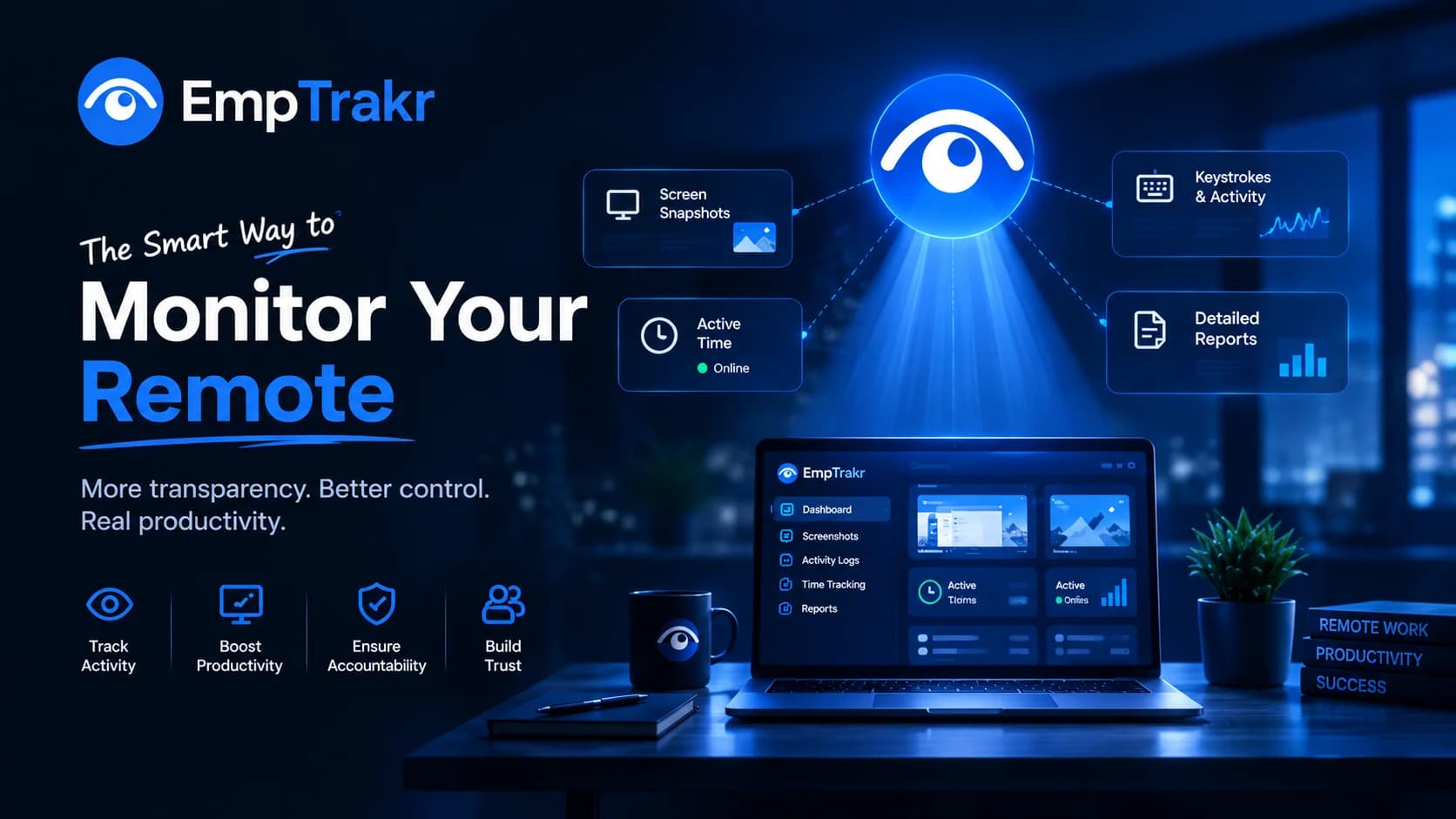
Employee monitoring software open source refers to workplace tools whose source code is available to inspect and modify. It can suit teams that value control over data and workflows, but “free” does not remove the work of hosting, maintaining, or evaluating a system. Start with purpose, transparency, and operational fit.
Employee monitoring software open source: definition and decision context?
Employee monitoring software open source is software designed to track, analyze, and report on work activity while making its source code available for review and modification. That combination distinguishes it from proprietary software, whose code is not publicly shared. The published definition
For a manager, the practical question is not whether the label sounds attractive. It is whether the team can operate the software responsibly and explain what information is collected. A transparent codebase may support closer inspection, but it does not by itself establish that a particular deployment is private, secure, or suitable for every workplace.
Use the label as a starting point for evaluation. Confirm the project’s documentation, hosting model, maintenance responsibilities, and employee-facing workflow before treating it as a fit for a remote or hybrid team. The supplied research describes the category broadly, so product-level conclusions should be checked separately.
If you are still defining the wider category, review Employee monitoring software Before comparing implementation details.
Who should consider employee monitoring software open source?
Open-source monitoring is worth considering for teams that want to examine or adapt a monitoring workflow instead of accepting a fixed proprietary setup. A 2023 guide frames the choice as a comparison between customizable, transparent open-source tools and proprietary products that may provide more features or support out of the box. The 2023 comparison
This can be relevant to a small business with a defined operational need, such as recording work hours or organizing project activity. It can also suit a technically capable team that wants more control over where information is hosted. Those are decision conditions, not promises about productivity or compliance.
It may be a weaker fit when nobody owns installation, updates, access controls, backups, and employee communication. The research presents a broad field of options rather than a universal recommendation, so the right choice depends on the workflow you need and the resources available to support it.
For a narrower time-based workflow, compare the requirements against Time tracking software Rather than assuming a full monitoring suite is necessary.
Benefits and practical limitations
Open-source tools can offer transparency, customization, and greater control over data and workflows, but those benefits come with operational responsibilities. One supplied guide describes growing interest in the category while also pointing readers toward features, implementation practices, and popular options. The category overview
Potential benefits
- Source code can be inspected and Modified rather than treated as entirely opaque.
- Self-hosting may give an organization more direct control over its data environment and workflows. Self-hosting guidance
- Employees may be able to view their own data in some tools, supporting a more transparent process. Employee data visibility
Practical limitations
- “Free” software can still require time, effort, and resources to operate properly. The maintenance caveat
- Self-hosting shifts responsibility for administration and security to the organization. The hosting tradeoff
- Open source does not automatically mean that a deployment is appropriate for every workforce or use case.
These tradeoffs matter for screenshot monitoring software for employees and other higher-sensitivity workflows. A team should define the minimum information needed, explain the purpose clearly, and give workers a practical way to understand the records created about them. The evidence supplied here supports a cautious comparison, not a claim that any monitoring approach produces a guaranteed business outcome.
Use Productivity tracking As a separate workflow question when the goal is understanding work patterns rather than collecting more types of activity data.
Attendance tracking software for remote teams and the reader decision
For attendance tracking software for remote teams, begin with the attendance problem rather than the open-source label. If the requirement is a clear record of hours, presence, or project time, a focused time-tracking workflow may be easier to explain and manage than a broad monitoring deployment.
The research says organizations should weigh open-source and proprietary systems to determine the fit for their operations. The fit comparison That principle supports a simple decision sequence: define the work question, identify the minimum data needed, assess who will maintain the tool, and then compare hosting and employee-visibility options.
Do not treat a source-code license as a substitute for an internal policy. A useful policy should state the purpose, scope, access rules, retention approach, and employee communication process in language the team can understand. Those policy details are implementation choices and should be reviewed for the locations where the team operates.
For teams considering a hybrid workplace attendance system, separate attendance records from optional activity signals. That distinction keeps the workflow easier to explain and reduces the temptation to collect information merely because a tool can collect it.
When screenshots are genuinely part of the defined workflow, review Screenshot monitoring As a separate decision rather than bundling it into attendance by default.
Employee monitoring software for small business and the reader decision
Employee monitoring software for small business should be judged by total ownership effort, not just by the absence of a subscription line. A recent comparison emphasizes control over data and workflows while warning that open-source software still needs time, effort, and resources to operate. The ownership warning
That makes implementation capacity a central question. Who installs the system? Who manages accounts? Who responds when an update, integration, or access issue appears? If those responsibilities are unclear, an apparently low-cost option can create friction even when the software itself is available without a conventional license fee.
Security and scalability also belong in the comparison. One supplied source recommends comparing open-source contenders on total cost of ownership, security, and scalability rather than features alone. The broader evaluation frame A small team can use those criteria without building a complex scoring model.
Start with a limited workflow and document the result. For example, define whether the organization needs attendance, timesheets, project hours, or a specific activity view. Then test whether managers and employees can interpret the records consistently. Avoid adding GPS attendance app for field teams or screen capture simply because those terms appear in a feature list.
For implementation planning, pair this evaluation with the site’s Installation guide And review access expectations through Security & privacy.
Conclusion
Employee monitoring software open source can be a reasonable category to investigate when a team values inspectable code, control over workflows, or a self-hosted approach. It is not automatically the right operational choice.
The clearest path is to define the work problem first, collect only what the workflow requires, and compare maintenance responsibilities alongside features. This keeps the decision grounded in the team’s actual capacity rather than in the appeal of a free or customizable label.
For remote and hybrid teams, transparency should remain part of the implementation plan. Explain the purpose, clarify who can access records, and make the workflow understandable to the people whose activity is being recorded. Then test the smallest useful process before expanding it.
That approach leaves room to compare open-source and proprietary systems fairly while keeping attendance, time tracking, productivity, and screenshot workflows distinct.
Sources
The Open-Source Employee Monitoring Software Built for Modern Teams
The Ultimate Guide to Open Source Employee Monitoring Software
Frequently Asked Questions
What is open source employee monitoring software?
Is open source employee monitoring software suitable for small businesses?
What should you compare before choosing an employee monitoring tool?
Related EmpTrakr resources
Continue with product pages that match this topic — and explore more guides on the blog.
Supercharge your workforce today.
Join leading companies using EmpTrakr to boost productivity, streamline tracking, and optimize remote teams.