Can employers see what you do on your computer | EmpTrakr
Can employers see what you do on your computer? Learn what to verify about monitoring scope, employee notice, privacy controls, pricing, and vendor evidence first.
In This Guide11 Sections
- 01What Is can employers see what you do on your computer?
- 02How Does can employers see what you do on your computer Work?
- 03Key Features and Specifications of can employers see what you do on your computer
- 04Benefits and Limitations
- 05Privacy, Security, and Product Evidence
- 06Who Should Consider can employers see what you do on your computer?
- 07What to Check Before Buying can employers see what you do on your computer
- 08Can employers see what you do on your computer vs. Manual Tracking
- 09Is can employers see what you do on your computer Worth Considering?
- 10Quick Specifications
- 11Final Verdict
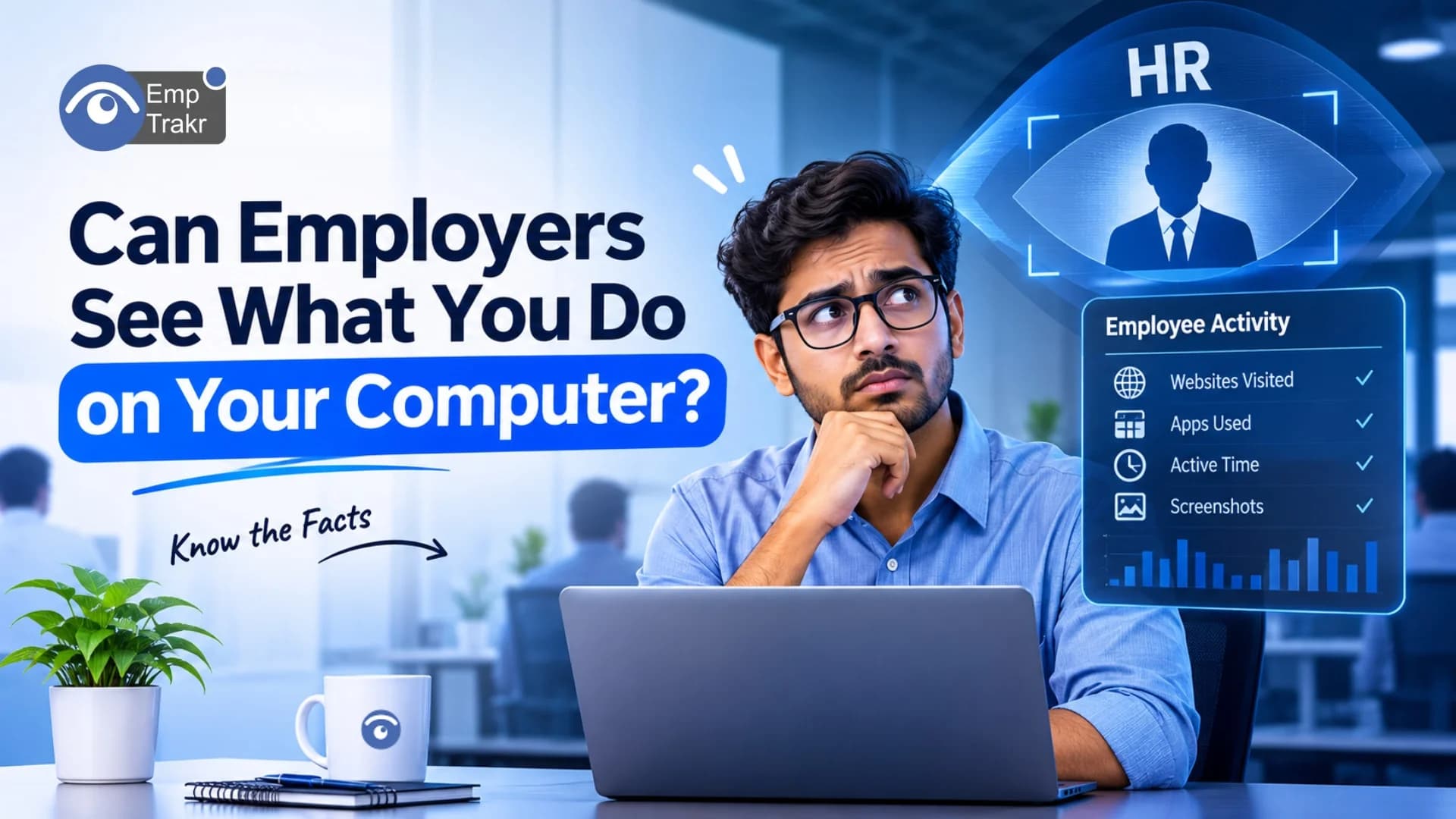
Whether an employer can see computer activity depends on the monitoring tools, settings, workplace policy, and information the organization has verified. This guide explains what buyers should check before choosing a workplace monitoring category. Product-specific capabilities, prices, compatibility, and security evidence are not verified in the supplied research bundle.
What Is can employers see what you do on your computer?
The phrase describes a buyer question about workplace computer monitoring, not a named product. A category-level answer cannot establish what any particular employer, application, or administrator can view. The result depends on the selected tool, its configuration, the information collected, and the organization’s stated purpose.
For a buyer, the useful starting point is not a feature checklist copied from another service. Ask what business problem requires visibility, which information is necessary, who may access it, and how long it should be retained. Those answers create a narrower basis for comparing employee monitoring software, time tracking software, or related workflows.
In the supplied evidence, no product identity, developer, seller, feature set, price, operating-system support, or security control is verified. Treat those fields as open questions rather than assumptions. A vendor conversation should fill the gaps with current documentation and terms that match the proposed implementation.
How Does can employers see what you do on your computer Work?
At a category level, a workplace monitoring workflow generally needs a collection method, an administrative view, and a process for interpreting the resulting information. The supplied research does not establish which collection methods, dashboards, reports, alerts, or administrative workflows any named product provides.
That uncertainty matters because a monitoring label can cover different operational choices. A buyer may be considering time records, attendance events, application activity, screenshots, or another form of workplace information. These should not be treated as interchangeable. Define the narrowest information needed for the stated purpose before comparing tools.
A responsible workflow also includes communication and review. Employees should be able to understand what the organization intends to collect and how managers will use it. The implementation should provide a way to correct context, investigate errors, and limit access to people with a legitimate work-related need.
Key Features and Specifications of can employers see what you do on your computer
No category feature can be assigned to every vendor from the supplied evidence. Buyers should therefore separate required capabilities from optional monitoring intensity. A time-tracking workflow may be evaluated differently from screenshot monitoring, while an attendance process may require different information from application-activity reporting.
For each candidate, request a plain-language description of the data collected, the collection trigger, the administrator view, export options, user permissions, retention settings, and deletion process. Ask whether the description applies to the current plan and deployment rather than to a general product family.
Do not infer screenshots, recording, integrations, device coverage, or configurable controls from a product category name. Each item needs direct documentation. If the vendor cannot explain it clearly, record the detail as unverified and consider whether the uncertainty is acceptable for the proposed rollout.
Benefits and Limitations
Potential operational value. A defined digital workflow may help an organization replace scattered manual records with a more consistent process. That is a buyer consideration, not a verified outcome for a particular product. The value depends on whether the information collected matches the work being managed and whether managers use it carefully.
Employee trust. Monitoring can affect the relationship between an organization and its workforce. Clear notice, a limited purpose, and an understandable review process are practical safeguards to examine before deployment. Avoid presenting visibility as a substitute for performance conversations, workload planning, or clear expectations.
Data quality. Activity information may require context. A record can indicate that a system event occurred without explaining the employee’s task, judgment, offline work, or reason for a gap. Buyers should ask how managers are expected to interpret records and correct mistakes.
Implementation effort. A tool may require policy drafting, configuration, access management, employee communication, support, and periodic review. None of those requirements is product-specific in the supplied evidence, so the implementation burden remains a planning question rather than a verified specification.
Privacy, Security, and Product Evidence
The supplied research contains no approved source establishing a vendor’s security architecture, audit status, certification, encryption practice, access model, retention period, or deletion control. The absence of that evidence does not prove a security weakness. It means a buyer should not treat any of those details as verified.
Request documentation that explains where information is stored, who can access it, how administrator permissions are managed, how data is deleted, and how the vendor handles support access. Also ask whether the product allows different roles for managers, administrators, and other users.
Privacy review should cover purpose limitation as well as technical controls. A buyer should document why each data type is needed, whether a less intrusive option would work, how employees will be informed, and how the organization will handle requests or disputes. Applicable workplace rules and internal policies should be checked with qualified advisers.
Who Should Consider can employers see what you do on your computer?
This category may merit evaluation when a manager needs a repeatable way to administer time, attendance, or another clearly defined operational process across a distributed team. The supplied evidence does not establish that any particular product is suitable for a small business, remote team, office team, or hybrid arrangement.
Suitability should be decided from the work process rather than from the amount of surveillance available. Start with the smallest useful scope. If a timesheet or attendance workflow answers the business question, a more intensive collection method may be unnecessary. If the purpose cannot be stated clearly, pause the purchase review.
Organizations with sensitive employee information should include HR, security, and relevant legal advisers in the decision. Managers should also define who reviews records and what action follows from an exception. A tool should support a documented process, not become the process by default.
What to Check Before Buying can employers see what you do on your computer
Begin with purpose and scope. Ask which work question the tool answers, what data it collects, when collection occurs, and whether employees can see relevant records. Confirm whether the proposed configuration can exclude information that is not necessary for the stated purpose.
Next, review notice and policy materials. The documentation should explain the monitoring practice in language employees can understand. Buyers should also establish access rules, retention expectations, correction procedures, deletion handling, and an escalation path for concerns before implementation.
Technical checks should be specific. Verify supported operating systems and devices, integrations, deployment steps, administrator roles, exports, support channels, and configuration options. Do not assume that a feature exists because it is common in the category.
Finally, obtain current commercial terms. Pricing, plan limits, licenses, renewals, implementation services, and cancellation conditions are not verified in the supplied evidence. Record each item as Not verified until the vendor provides applicable terms for the intended deployment.
For related planning, readers can compare Employee monitoring software, review Time tracking software, and examine Security & privacy Considerations.
Can employers see what you do on your computer vs. Manual Tracking
The comparison below is a decision framework, not a product specification. The supplied research does not verify category-wide behavior for the software column.
| Factor | Can employers see what you do on your computer | Manual tracking |
|---|---|---|
| Data entry | Not verified; varies by vendor and configuration. | Requires a defined human recording process. |
| Time required | Not verified; assess setup and ongoing administration. | Depends on the agreed workflow and review burden. |
| Consistency | Not verified; test against the intended work process. | Depends on consistent participation and supervision. |
| Manager review | Not verified; confirm roles, reports, and access. | Uses the records made available through the chosen process. |
| Employee visibility and notice | Not verified; request the vendor’s controls and policy guidance. | Depends on how the organization communicates the process. |
| Privacy and oversight | Not verified; review collection, access, retention, and deletion. | Depends on what information is recorded and who can see it. |
Is can employers see what you do on your computer Worth Considering?
The category is worth considering only when a defined operational need exists and the proposed collection is proportionate to that need. The available evidence is too limited to recommend a named product, confirm a price, or compare verified capabilities.
A practical evaluation should balance administrative usefulness with employee visibility, data minimization, security evidence, implementation effort, and ongoing governance. The buyer should be able to explain what the tool records, why it records it, who reviews it, and when the information is removed.
EmpTrakr can be a starting point for reviewing related workplace operations, but the supplied research does not verify product-specific claims for this article. Treat every feature, compatibility statement, price, and control as something to confirm before purchase.
Quick Specifications
| Feature | Details |
|---|---|
| Product category | Workplace monitoring and workforce productivity software; specific product not verified. |
| Deployment | Not verified. |
| Supported operating systems and devices | Not verified. |
| Activity data collected | Not verified; varies by vendor and configuration. |
| Time tracking | Not verified. |
| Screenshots or screen recording | Not verified. |
| Integrations | Not verified. |
| Access, retention, and deletion controls | Not verified. |
| Pricing and license | Not verified. |
Final Verdict
The supplied research does not verify a specific product or any product-level feature, price, compatibility statement, security control, or performance result. The defensible conclusion is therefore a buyer’s checklist rather than a product recommendation.
Define the purpose, limit collection, communicate the policy, verify access and retention controls, and obtain current commercial and technical documentation. For a workplace decision, review the proposed process with appropriate HR, security, and legal advisers before implementation.
Frequently Asked Questions
Can employers see what you do on your computer?
What data can workplace monitoring software collect?
Can a small team use computer monitoring software?
Are screenshots or screen recording included?
How should buyers review privacy and security?
How much does employee monitoring software cost?
What should employers verify before implementation?
Is manual tracking an alternative?
Explore Further
Related EmpTrakr Resources
Continue with product pages that match this topic — and explore more guides on the blog.
A More Focused Workday Starts Here
Turn Insight Into Better Workdays.
Give teams the clarity they need with simple time tracking, activity insights, and flexible reporting.