Free vs Paid Employee Monitoring Software: Is Upgrading Actually Worth It?| EmpTrakr
Read our comprehensive employee monitoring pricing comparison. Don't let free tracker limitations hold you back—discover the true paid monitoring software ROI.
Introduction
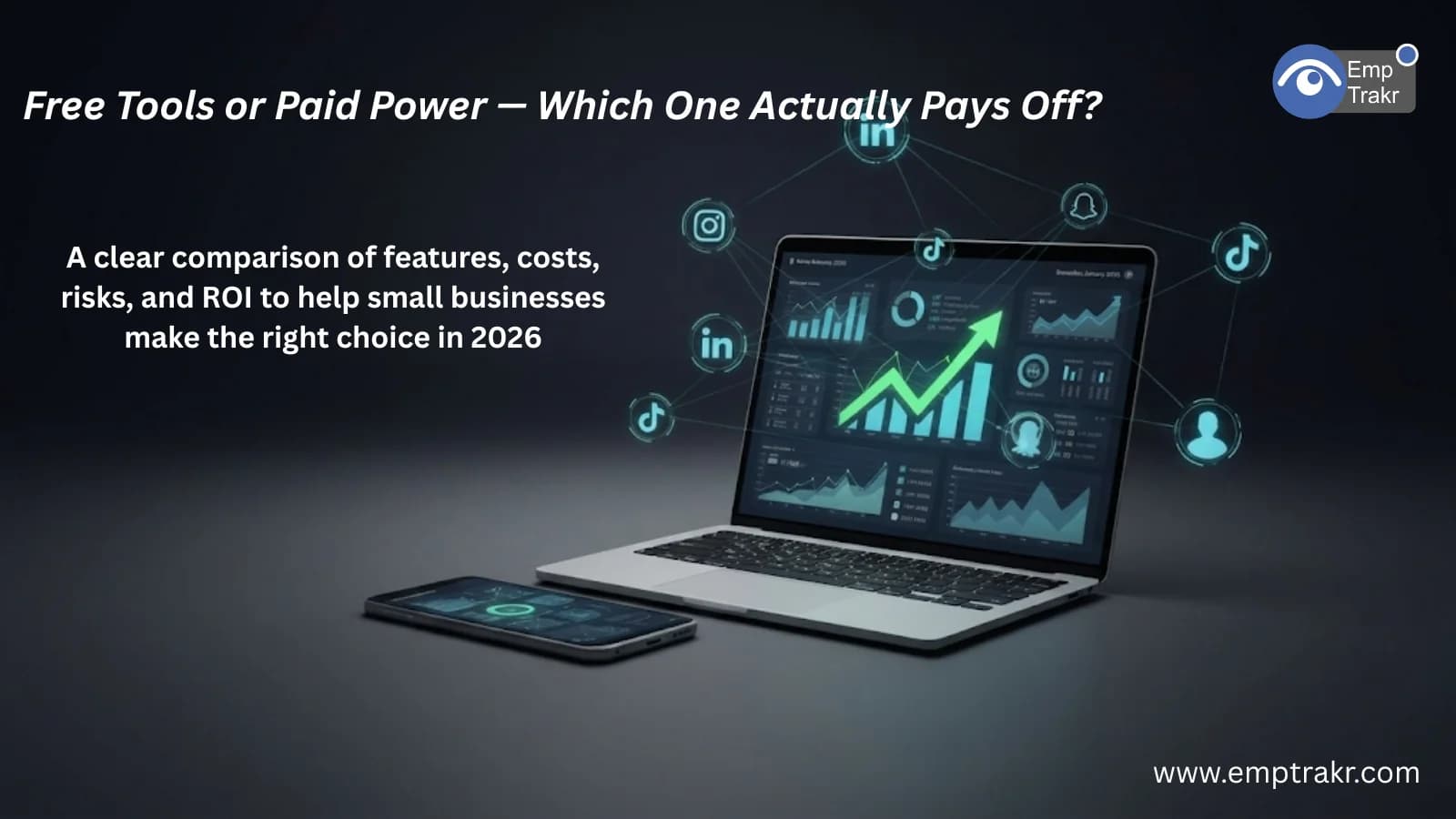
Executive decision-makers face increasing pressure to balance workforce productivity with operational costs in competitive markets. Free versus paid employee monitoring software represents a critical choice that directly influences data security, compliance, and return on investment. Organizations must evaluate these options carefully to determine whether basic tools suffice or if advanced platforms deliver measurable value. This analysis examines the practical differences between free and paid solutions, highlights free tracker limitations, and assesses paid monitoring software ROI through pricing comparison and upgrade triggers. Leaders will gain clear insights on when to upgrade monitoring tool capabilities to support strategic goals without unnecessary expenditure.
Understanding Free Employee Monitoring Tools
Free employee monitoring solutions typically offer core features such as basic time tracking and screenshot capture. These tools appeal to smaller operations seeking immediate deployment without upfront costs. However, free tracker limitations often surface in areas like data storage capacity, real-time alerts, and integration with existing enterprise systems. Many free platforms restrict user numbers or limit historical reporting, which constrains scalability as teams expand. C-level executives reviewing these options should note that support availability remains minimal, increasing internal IT burden over time.
Real-world applications reveal consistent patterns where free tools suffice for simple oversight but falter under regulatory demands. For instance, industries handling sensitive client data require audit trails that free versions rarely provide at enterprise grade. When organizations test free solutions, they frequently encounter export restrictions and lack of customization for role-based access controls. These constraints can lead to incomplete visibility and potential compliance gaps. Decision-makers benefit from mapping current needs against these boundaries before committing resources.
Evaluating Paid Monitoring Software ROI
Paid monitoring platforms deliver expanded functionality including advanced analytics, AI-driven behavior insights, and robust security protocols. The paid monitoring software ROI becomes evident through reduced productivity losses and streamlined compliance processes. Organizations that invest in these tools report faster identification of workflow inefficiencies and improved accountability across distributed teams. Pricing models often scale with user count or feature tiers, allowing precise alignment with business size and objectives.
Case examples demonstrate clear value when paid solutions replace fragmented free alternatives. A mid-sized firm that upgraded observed a 25 percent reduction in unauthorized access incidents within the first quarter. Such outcomes stem from centralized dashboards and automated reporting that free tools cannot match. Executives evaluating these platforms should calculate total cost of ownership against projected efficiency gains. This assessment clarifies whether the investment supports long-term operational resilience.
Employee Monitoring Pricing Comparison and Upgrade Timing
An employee monitoring pricing comparison shows free options carry hidden expenses through limited features and higher manual oversight requirements. Paid tiers typically range from per-user monthly fees to enterprise licenses, with added value in dedicated support and regular updates. When to upgrade monitoring tool becomes apparent once free limitations impact decision-making speed or expose security vulnerabilities. Key indicators include team growth beyond free user caps or the need for mobile device compatibility.
Practical advice for leaders involves conducting a structured audit of current monitoring gaps. This process identifies whether productivity metrics justify the shift to paid software. Integration capabilities with HR systems and data encryption standards further differentiate paid offerings. Many organizations find that phased upgrades minimize disruption while capturing incremental returns. The link to detailed evaluations of free tools provides additional context for informed comparisons: Https://emptrakr.com/blog/free-employee-monitoring-software-7-best-tools-that-actually-work-in-2026.
Conclusion
Free employee monitoring tools present initial cost advantages but introduce significant free tracker limitations that hinder growth. Paid solutions deliver stronger paid monitoring software ROI when organizations require advanced features and reliable support. Leaders should assess employee monitoring pricing comparison data to determine when to upgrade monitoring tool infrastructure. Contact our specialists today to explore tailored monitoring strategies for your executive team.
Related EmpTrakr resources
Continue with product pages that match this topic — and explore more guides on the blog.
Supercharge your workforce today.
Join leading companies using EmpTrakr to boost productivity, streamline tracking, and optimize remote teams.