Employee Time Tracking Software Guide| EmpTrakr
Employee time tracking software helps SMBs log hours for payroll and remote productivity. Compare features, costs, privacy, and market options in this
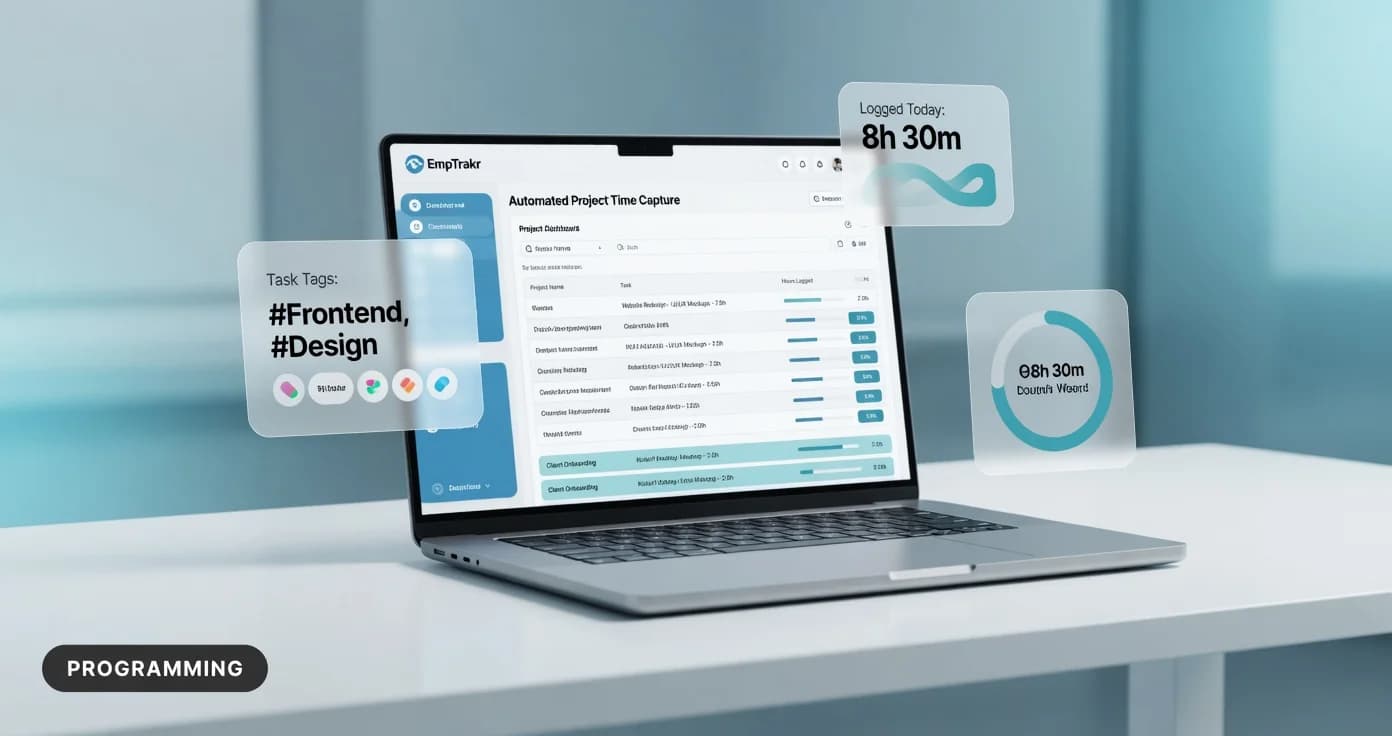
Employee time tracking software helps SMBs and remote teams record hours accurately for payroll, projects, and insights. Automated tools cut manual entry while supporting hybrid work. Market growth tracks remote adoption, yet buyers must weigh features against privacy and compliance. Review options carefully for your team size.
Employee time tracking software: definition and decision context
Employee time tracking software records work hours, tasks, and attendance to support payroll accuracy and operational visibility for managers. It ranges from simple timers to automated systems that capture activity without constant manual input.
One 2026 overview presents more than 20 leading employee time tracking solutions that convert work data into actionable insights for remote, hybrid, and office teams.Desklog.io 2026 list These tools aim to treat time data as strategic intelligence rather than a simple hours record. Decision makers at SMBs should map needs first: payroll integration, project billing, or attendance compliance. Cloud options often dominate for distributed staff, while on-premises suits stricter security environments. Always confirm local labor rules before rollout, as laws differ by state and country. Practical next steps include listing required integrations and testing free trials against real workflows. This framing keeps selection focused on measurable operational fit instead of unneeded complexity.
Organizations gain clearer resource allocation when hours link directly to projects. Readers evaluating for commercial use can start by auditing current manual processes for error points. Related resources include our Time tracking software Overview for deeper feature details.
Who should consider employee time tracking software?
SMB managers, HR admins, and founders running remote or hybrid teams should consider employee time tracking software when manual timesheets create payroll delays or visibility gaps. It suits teams needing reliable attendance data without heavy enterprise overhead.
A curated 2026 ranking highlights top solutions such as Desklog, Clockify, Time Doctor, Jibble, and My Hours among 20 leading options that automate recording and generate performance reports.Desklog.io top 5 ranking These tools remove many manual entries while delivering accurate data. Founders with distributed staff benefit most from real-time visibility into utilization. HR teams handling multi-state compliance also gain from audit-ready logs. Limitations appear when teams lack clear policies, which can reduce adoption. Start by identifying pain points like overtime disputes or project overruns. Then pilot two or three tools against a small group. This approach surfaces fit faster than broad searches. Cross-check against Attendance tracking Needs for hybrid schedules.
Remote productivity trackers become relevant once headcount exceeds a handful of people. Validation involves confirming mobile access and offline capture for field staff. Keep evaluation criteria simple and documented so later scaling remains straightforward.
Benefits and practical limitations
Employee time tracking software delivers automation for hours capture, better payroll accuracy, and data for resource planning, yet it introduces privacy considerations and implementation effort. Benefits appear strongest when remote work expands the need for visibility.
The employee time tracking software for enterprises market was valued at USD 1.49 billion in 2025 and is projected to grow to USD 1.62 billion in 2026, with a CAGR of 9.47 percent, reaching USD 2.81 billion by 2032.Giiresearch.com market data Growth signals demand for systems that integrate with payroll and workforce planning. Practical benefits include fewer billing disputes and clearer project costs. Limitations include setup time, staff training needs, and potential resistance if monitoring feels excessive.
Data misuse risks require clear policies and access controls. Another report notes strong demand from enterprises seeking data-driven insights to improve accountability and allocation.Fortune Business Insights overview Source limits apply: figures cover different market scopes and should not be treated as identical. SMBs can mitigate limits by choosing tools with transparent employee dashboards. Always pair software with written guidelines. This balance protects both accuracy and trust.
Cost trade-offs matter: free tiers may lack advanced reporting while paid plans add analytics. Test against actual payroll cycles before full commitment. Link to Security & privacy For policy templates.
Time attendance apps and the reader decision
Time attendance apps help readers decide by clarifying deployment choices, drivers such as remote work, and competitive leaders when selecting workforce tools. Cloud models currently hold the largest share for flexible teams.
Key takeaways from one market report show the global employee time tracking apps market valued at $5.8 billion in 2025, expected to reach $12.4 billion by 2034 at a CAGR of 8.9 percent. Cloud deployment held the largest share at 68.5 percent, North America dominated with 32.4 percent revenue share, and key drivers include remote work adoption, automation demand, regulatory compliance, and real-time analytics. Toggl and Clockify led the competitive landscape.Dataintelo.com key takeaways These figures guide decisions toward cloud-first solutions for hybrid setups.
Readers should map their industry—IT, healthcare, retail—to the segments covered. Automation demand favors tools that capture project time without extra clicks. Compliance needs push for audit logs. Caveat: projections depend on the report's methodology and do not guarantee individual results. Compare free versus paid tiers against actual usage volume. Evaluate mobile apps for field attendance. Decision checklists work best when they score must-have features first. Cross-reference Productivity tracking For related metrics.
Another growth study cites an 8.7 percent CAGR projection for employee time tracking apps from 2026 to 2033, reinforcing the remote-work driver theme.LinkedIn market pulse Use these signals only as context, not forecasts for your own ROI.
Workforce timesheet tools and the reader decision
Workforce timesheet tools support reader decisions by segmenting options across deployment modes, applications such as payroll and project management, and organization sizes. Choosing correctly starts with matching enterprise size and end-user industry.
Market research segments the space by on-premises versus cloud deployment, applications including payroll management, project management, workforce management, and others, plus small and medium enterprises versus large ones, and end-users such as BFSI, healthcare, IT, retail, and manufacturing.Dataintelo.com market segments SMBs typically favor cloud for lower upfront cost and easier remote access. Payroll-focused tools reduce timesheet disputes. Project tools help billable-hour tracking.
Decision factors include integration depth with existing HRIS or accounting platforms. Regulatory compliance drivers appear consistently across reports. Source limits: segment data reflects the report period and geography. Avoid assuming one tool fits all industries. Pilot with a subset of users and measure accuracy against prior manual methods. Review biometric or mobile clock-in options only if physical presence verification is required. Keep the decision matrix short and scored. Internal guidance on Installation guide Can smooth technical rollout once a shortlist emerges.
Readers should also weigh training effort and ongoing support quality. Transparent pricing models reduce later surprises. Document the evaluation criteria so future audits remain simple.
Evidence gap: Refresh or deepen the existing coverage for 'attendance tracking software' to su
Attendance tracking software coverage benefits from refreshed evidence on productivity tools, as multiple independent roundups list twenty options that address hour accuracy and hybrid schedules. Deepening this area supports better commercial comparisons.
One 2025 analysis presents 20 best time tracking software options aimed at increasing productivity, drawing on HR process expertise to evaluate systematic workflows.People Managing People 2025 list The review highlights tools that streamline timesheets and reduce administrative load. Readers seeking attendance-focused solutions can use these lists to identify mobile or biometric-capable products. Evidence remains limited to public roundups rather than head-to-head lab tests, so treat rankings as starting points.
Practical implication: cross-check claimed integrations against your payroll provider. For free tiers, verify user limits and export options before committing. This refresh addresses gaps around free and hybrid attendance use cases. Pair software selection with policy updates that explain data use. Related reading covers Screenshot monitoring Only when visual verification is a defined need. Always prefer tools that give employees self-service access to their own records.
Expanding coverage also means noting that automated capture reduces entry errors but still requires manager review for exceptions. Keep evidence current by rechecking vendor documentation quarterly.
How should readers validate the available evidence?
Readers should validate evidence by cross-checking market figures against multiple independent reports, confirming tool claims through trials, and reviewing workplace technology governance for privacy and fairness. Schedule and shift examples further illustrate real-world complexity.
One discussion of flexible schedules such as the 2-2-3 pattern shows how twelve-hour shifts require precise time systems to maintain coordination and fairness.Desklog.io schedule context Validation steps include reading primary report methodology, testing free trials for accuracy, and confirming data export formats. Union-related guidance adds another layer: agreements often include requirements for bargaining over implementation, limits on how systems can be used, protections against unfair discipline or data misuse, and guarantees of employee access and oversight rights.UC Berkeley Labor Center provisions These clauses highlight the need for transparent policies even in non-union settings.
Caveat: academic and market sources cover different scopes and should not be merged into single projections. Practical checklist: (1) verify numbers with original links, (2) run a two-week pilot, (3) survey staff on ease of use, (4) audit sample payroll outputs. This process surfaces gaps early. Revisit Employee monitoring software Only after core time needs are met. Document findings for internal stakeholders.
Final validation includes checking that any chosen tool supports required labor-law retention periods. Evidence quality improves when buyers prioritize primary sources over secondary summaries.
Frequently asked questions
What features matter most in workforce time clocks?
Core features for workforce time clocks include automated hour capture, payroll export, mobile access, and project tagging. Automation reduces manual errors while delivering performance reports.Desklog.io automation note Cloud deployment and real-time analytics also rank high in market drivers.Dataintelo drivers Test integrations before purchase. Caveat: feature lists vary by vendor documentation.
What privacy risks come with employee hour logging?
Privacy risks include potential data misuse, unauthorized edits, and lack of employee access to their own records. Union provisions address these through bargaining requirements, usage limits, protections against unfair discipline, and oversight rights.Berkeley Labor Center Clear policies and audit logs reduce exposure. Always consult local counsel for jurisdiction-specific rules.
Which attendance trackers work best for remote teams?
Attendance trackers suited to remote teams emphasize cloud access, mobile clock-in, and automated recording. Roundups list solutions such as Clockify, Time Doctor, Jibble, and My Hours among leading options that support distributed work.Desklog.io 2026 ranking Remote work adoption is a primary market driver.Dataintelo report Pilot for your connectivity conditions. Rankings are third-party opinions, not guarantees.
Is free time clock software reliable for SMBs?
Free time clock software can serve basic SMB needs for hour logging and attendance when paid features are unnecessary. Many roundups include free-tier options among broader lists of productivity tools.People Managing People 2025 Reliability depends on user limits, export quality, and support. Verify against payroll accuracy requirements before relying on free plans long-term.
How accurate are automated project time capture tools?
Automated project time capture tools remove many manual entries and deliver accurate data plus performance reports when properly configured.Desklog.io automation description Accuracy improves with clear task tagging and regular manager review of exceptions. Source material does not publish error-rate studies, so treat claims as directional. Run parallel manual checks during initial rollout.
Sources
- 20+ Best Employee Time Tracking Software & Apps in 2026 — desklog.io, retrieved 2026-07-15
- The time tracking tool for Enterprises Market by Integration, Pricing Model, Feature, Deployment, Organization Size, Industry - Global Forecast 2026-2032 — giiresearch.com, published 2026-01-13, retrieved 2026-07-15
- Sustaining Industry Growth: A Study of the Employee Time Tracking Apps Market Report and Its Projected 8.7% CAGR from 2026 to 2033 — linkedin.com, retrieved 2026-07-15
- Employee Time Tracking Apps Market Research Report 2033 — dataintelo.com, retrieved 2026-07-15
- 20 Best Time Tracking Software For Increasing Productivity In 2025 — peoplemanagingpeople.com, published 2025-02-13, retrieved 2026-07-15
- Time Tracking Software Market Size, Share | Forecast, 2026-2034 — fortunebusinessinsights.com, retrieved 2026-07-15
- Payroll and time and attendance management systems — laborcenter.berkeley.edu, published 2025-06-19, retrieved 2026-07-15
Related: Pricing.
Frequently Asked Questions
What features matter most in workforce time clocks?
What privacy risks come with employee hour logging?
Which attendance trackers work best for remote teams?
Is free time clock software reliable for SMBs?
How accurate are automated project time capture tools?
Related EmpTrakr resources
Continue with product pages that match this topic — and explore more guides on the blog.
Supercharge your workforce today.
Join leading companies using EmpTrakr to boost productivity, streamline tracking, and optimize remote teams.