Hybrid Work Monitoring — How to Track Productivity Across Office and Remote Teams| EmpTrakr
Hybrid teams are harder to monitor consistently. Learn how hybrid work monitoring software gives managers unified visibility across office, remote, and field employees.
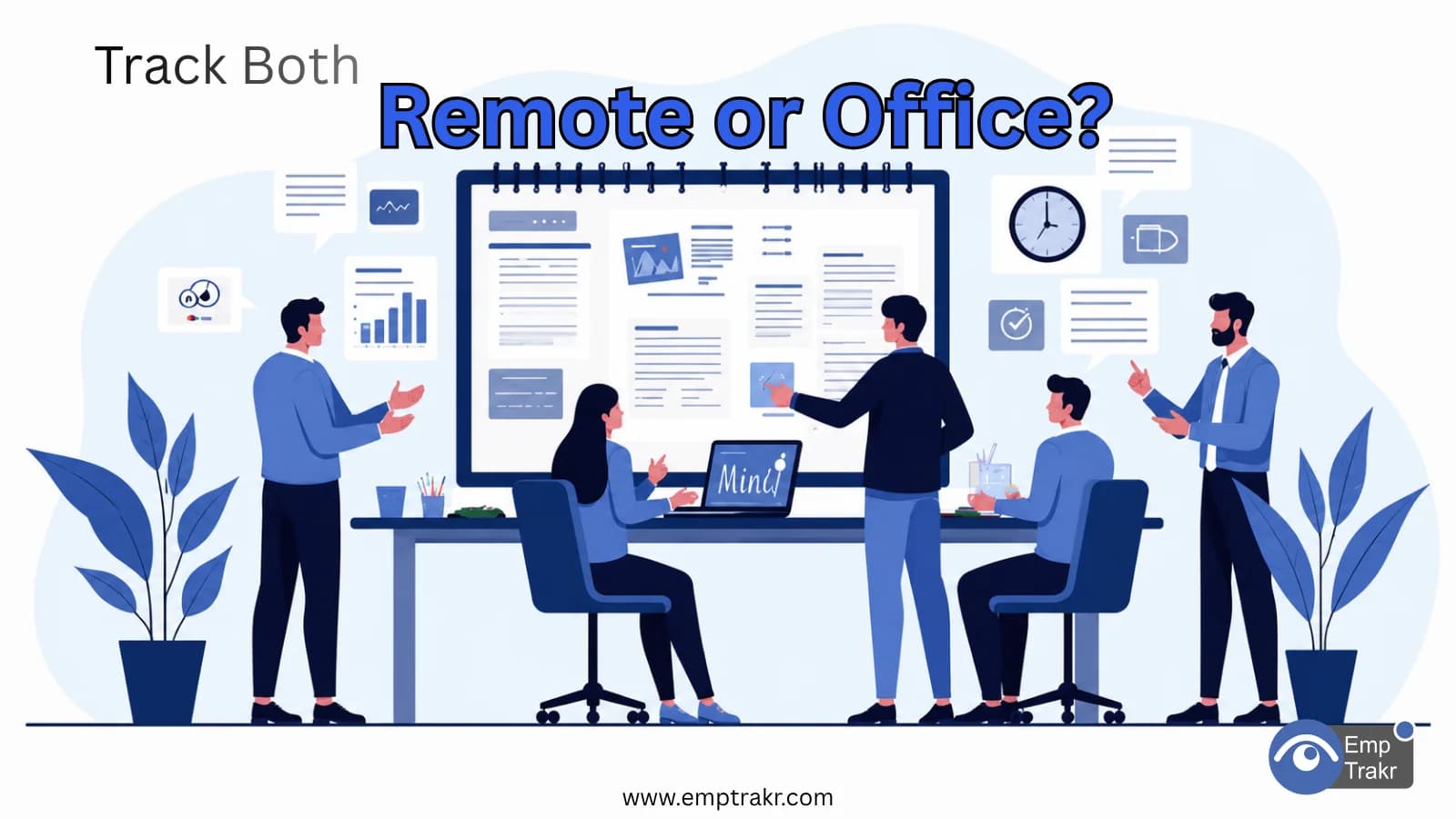
Hybrid work has become the standard for many organizations. Employees split their time between the office and home, giving businesses greater flexibility while helping teams maintain work-life balance.
However, hybrid work also creates new management challenges.
How do you measure productivity fairly when some employees work in the office while others work remotely? How do managers maintain visibility without micromanaging? And how can businesses ensure consistent performance across different work environments?
This is where Hybrid work monitoring software Becomes essential.
In this guide, you'll learn how hybrid workforce monitoring works, what features matter most, and how businesses can effectively track productivity across office and remote teams in 2026.
What Is Hybrid Work Monitoring?
Hybrid work monitoring refers to tracking workforce productivity, attendance, activity, and performance across both office-based and remote employees.
Instead of managing separate systems for different work environments, organizations use centralized tools that provide a unified view of workforce activity.
A modern Hybrid work monitoring software Solution helps managers:
-
Track productivity
-
Monitor attendance
-
Analyze work patterns
-
Generate workforce reports
-
Improve accountability
-
Support performance management
The goal is visibility and consistency, not excessive oversight.
Why Hybrid Teams Need Different Management Approaches
Traditional management methods often rely on physical presence.
In a hybrid workplace, visibility becomes more complicated.
Common challenges include:
-
Uneven productivity tracking
-
Limited workforce visibility
-
Inconsistent reporting
-
Communication gaps
-
Difficulty measuring performance fairly
-
Increased administrative work
Without the right systems, managers may struggle to evaluate performance objectively.
This is why many businesses invest in Hybrid work monitoring software To create a consistent framework for workforce management.
Benefits of Hybrid Work Monitoring Software
Unified Workforce Visibility
Managers can monitor office and remote employees from one dashboard.
Better Productivity Insights
Work patterns become easier to understand and analyze.
Consistent Performance Tracking
All employees are measured using the same standards.
Improved Accountability
Clear metrics encourage ownership and responsibility.
Reduced Administrative Work
Automation eliminates manual reporting processes.
These benefits help organizations manage hybrid teams more effectively.
Hybrid Team Employee Monitoring Tool Features
A modern Hybrid team employee monitoring tool Should provide comprehensive workforce insights while remaining easy to use.
Essential Features
| Feature | Benefit |
|---|---|
| Attendance Tracking | Verify work schedules |
| Productivity Analytics | Measure performance trends |
| Activity Monitoring | Improve workforce visibility |
| Workforce Dashboards | Centralize reporting |
| Automated Reports | Save management time |
| Team Performance Metrics | Support decision-making |
The best Hybrid team employee monitoring tool Solutions provide meaningful insights without creating unnecessary complexity.
Monitor Office and Remote Employees Together
One of the biggest advantages of modern workforce platforms is the ability to Monitor office and remote employees together.
Instead of maintaining separate reporting systems, managers gain access to unified workforce data.
What Can Be Tracked?
-
Attendance
-
Work hours
-
Productivity metrics
-
Application usage
-
Team performance
-
Workforce trends
The ability to Monitor office and remote employees together Helps ensure fairness and consistency across the organization.
Unified Workforce Monitoring Hybrid Work Strategies
Successful Unified workforce monitoring hybrid work Programs focus on transparency and outcomes.
Establish Clear Expectations
Employees should understand performance goals regardless of location.
Measure Productivity Consistently
Use the same metrics for office and remote workers.
Focus on Results
Evaluate outcomes instead of physical presence.
Use Centralized Reporting
Consolidate workforce data into a single platform.
Communicate Transparently
Employees should know what data is collected and how it is used.
Organizations that adopt these practices often achieve stronger productivity and employee trust.
Hybrid Workplace Productivity Software 2026: What to Look For
When evaluating Hybrid workplace productivity software 2026, consider the following capabilities.
Workforce Analytics
Identify productivity trends and performance patterns.
Attendance Monitoring
Track schedules across multiple work environments.
Productivity Dashboards
Provide managers with real-time workforce visibility.
Automated Reporting
Reduce administrative workload.
Scalability
Support growing teams and evolving business needs.
Ease of Use
Ensure quick adoption by employees and managers.
The best Hybrid Workplace productivity Software 2026 Combines these features into a unified workforce management solution.
Hybrid Work Monitoring vs Traditional Management
The shift to hybrid work has changed how organizations manage productivity.
| Feature | Traditional Management | Hybrid Work Monitoring |
|---|---|---|
| Visibility | Location-Based | Data-Based |
| Reporting | Manual | Automated |
| Productivity Tracking | Limited | Comprehensive |
| Workforce Insights | Basic | Advanced |
| Scalability | Moderate | High |
| Decision-Making | Reactive | Proactive |
This evolution allows managers to focus more on outcomes and less on physical supervision.
Common Hybrid Work Monitoring Mistakes
Measuring Presence Instead of Productivity
Being online does not always equal productive work.
Using Different Standards
Office and remote employees should be evaluated consistently.
Overmonitoring Employees
Excessive tracking can reduce trust and morale.
Ignoring Workforce Data
Collecting data without acting on insights limits its value.
Lack of Transparency
Employees should always understand monitoring practices.
Avoiding these mistakes helps organizations build healthier hybrid work environments.
How EmpTrakr Supports Hybrid Workforce Monitoring
EmpTrakr Provides workforce management tools designed to help businesses monitor productivity across office and remote teams.
Key Features
-
Attendance tracking
-
Productivity monitoring
-
Workforce dashboards
-
Application usage reports
-
Team performance insights
-
Automated reporting
-
Activity analytics
-
Workforce visibility tools
These capabilities help managers understand workforce performance regardless of employee location.
Best Practices for Managing Hybrid Teams
Focus on Outcomes
Measure results rather than activity alone.
Maintain Consistent Policies
Apply the same standards across all work environments.
Review Productivity Trends
Use workforce analytics to identify improvement opportunities.
Encourage Communication
Strong communication supports productivity and engagement.
Use Data Responsibly
Monitoring should support performance improvement, not micromanagement.
Final Thoughts
Hybrid work is no longer a temporary trend—it's a permanent part of how many businesses operate.
The right Hybrid work monitoring software Helps organizations maintain visibility, improve accountability, and track productivity consistently across office and remote teams.
Whether you're evaluating a Hybrid team employee monitoring tool, looking to Monitor office and remote employees together, implementing Unified workforce monitoring hybrid work Strategies, or researching Hybrid workplace productivity software 2026, the goal should be creating a fair, transparent, and data-driven approach to workforce management.
For businesses seeking a centralized solution, EmpTrakr provides the monitoring, reporting, and productivity analytics needed to manage hybrid teams effectively.
Frequently Asked Questions
What is hybrid work monitoring software?
Hybrid work monitoring software helps businesses track productivity, attendance, and workforce activity across both office and remote employees.
Why do companies use a hybrid team employee monitoring tool?
It provides visibility into workforce performance and helps managers track productivity consistently across different work environments.
Can businesses monitor office and remote employees together?
Yes. Modern workforce management platforms provide centralized dashboards that combine productivity and attendance data from all employees.
What is unified workforce monitoring hybrid work?
It refers to managing office-based and remote employees through a single system using consistent performance metrics and reporting.
What should hybrid workplace productivity software 2026 include?
It should offer productivity analytics, attendance tracking, workforce dashboards, automated reporting, and performance insights for both office and remote teams.
Related EmpTrakr resources
Continue with product pages that match this topic — and explore more guides on the blog.
Supercharge your workforce today.
Join leading companies using EmpTrakr to boost productivity, streamline tracking, and optimize remote teams.