Employee Time Padding: Causes, Signs & Prevention
Understand employee time padding, compare tracking workflows, and review privacy, notice, pricing, and verification questions before choosing workplace software.
In This Guide11 Sections
- 01What Is employee time padding?
- 02How Does employee time padding Work?
- 03Key Features and Specifications of employee time padding
- 04Benefits and Limitations
- 05Privacy, Security, and Product Evidence
- 06Who Should Consider employee time padding?
- 07What to Check Before Buying employee time padding
- 08Employee time padding vs. Manual Tracking
- 09Is employee time padding Worth Considering?
- 10Quick Specifications
- 11Final Verdict
Employee time padding is a workplace timekeeping concern, not a verified software product in the supplied evidence. Buyers should compare how tools record time, support employee notice, protect records, and allow review. Product features, pricing, compatibility, and retention terms remain unverified here, so confirm them directly before adopting a tool.
What Is employee time padding?
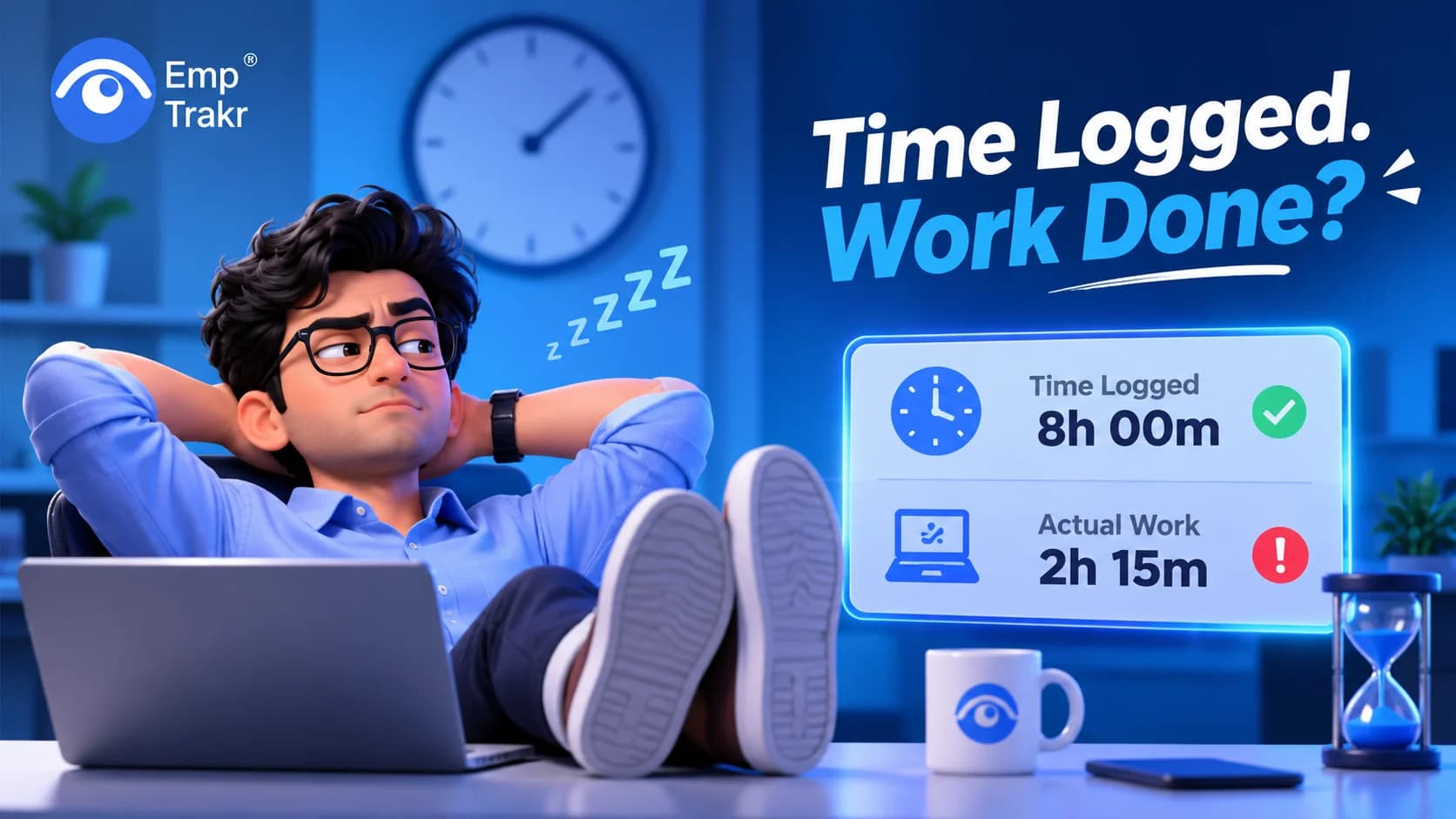
Employee time padding describes a concern about recorded working time exceeding the time a person actually worked. In this article, the phrase is treated as a search topic rather than the identity of a software product. No approved research identifies a developer, seller, product name, or common specification for the phrase.
That distinction matters for buyers. A category-level concern can lead to several different responses, including clearer timesheet procedures, manager review, attendance workflows, or software evaluation. Those responses are not interchangeable. The right choice depends on the purpose of the record, the people who need access, the notice provided to workers, and the controls a selected vendor documents.
How Does employee time padding Work?
There is no verified product workflow to describe for this topic. In general terms, a workplace may collect time entries through manual records, attendance events, task-based entries, or another documented workflow. The supplied evidence does not establish which of these methods any particular product uses.
A responsible evaluation starts by mapping the process rather than assuming that more monitoring produces a better record. Identify when time begins and ends, how breaks are handled, who may correct an entry, and how a correction is explained. Then ask whether the proposed tool records only what is needed for that purpose.
Managers should also separate a questionable entry from a conclusion about employee conduct. A discrepancy may reflect a forgotten entry, a correction process, a schedule change, or an unsuitable workflow. Any software should support review and correction without turning an unverified signal into a disciplinary finding.
Key Features and Specifications of employee time padding
No product-specific features or specifications are verified in the research bundle. As a category-level buyer question, the useful feature list is the set of capabilities a vendor can document clearly: time entry, attendance handling, correction history, manager review, employee visibility, permissions, retention, and deletion.
Do not infer one capability from another. A system that records activity is not automatically a time tracker, and a time tracker is not automatically an attendance system. Likewise, a dashboard does not by itself establish that employees can see records or challenge an inaccurate entry. Ask for product documentation covering each workflow separately.
For remote and hybrid teams, the practical test is whether the workflow remains understandable across locations and schedules. Buyers should request a demonstration using a representative process, then record which steps are automatic, which require a person, and which remain unsupported. In the absence of approved product evidence, each result should be marked for verification.
Time tracking software And Attendance tracking Are related evaluation areas, but neither page should be treated as evidence for an unnamed product in this article.
Benefits and Limitations
Potential benefit: A defined workflow can make time records easier to review than an informal process. That benefit depends on accurate entries, clear ownership, and a correction path. It should not be described as an outcome guaranteed by a software category.
Potential benefit: A consistent record may help a manager and an employee discuss the same underlying entry. The value is reduced if the record is difficult to understand, if employees cannot see relevant information, or if managers treat an exception as proof of misconduct.
Limitation: No approved evidence establishes the accuracy, coverage, or error rate of any product for this topic. Buyers should therefore avoid performance claims and ask vendors to explain how records are created, edited, exported, and checked.
Limitation: Monitoring can create privacy and trust concerns when its purpose, scope, audience, and retention are unclear. A narrowly defined process may be easier to explain than a broad collection program, but the appropriate scope still requires an organization-specific review.
Implementation consideration: A tool can add administrative work if policies, permissions, corrections, and employee questions are not planned. Compare the full workflow, including setup and review, rather than judging a tool only by the presence of a tracking feature.
For adjacent evaluation, buyers can review Productivity tracking Without assuming that productivity signals are equivalent to time records.
Privacy, Security, and Product Evidence
The supplied research does not verify security controls, audits, certifications, testing, data locations, or retention settings for a named product. The absence of that evidence is not proof of a security failure; it means the buyer should request and assess the missing information before relying on a system.
Start with data minimization. Ask what the tool collects, why each data element is needed, who can view it, and whether access can be limited by role. Confirm how corrections, exports, deletion requests, and account closure are handled. These questions are useful whether the workflow uses manual entries or software.
Employee notice should explain the purpose and practical operation of the process in language workers can understand. A policy should also state how records may be reviewed and how concerns can be raised. This article does not establish legal compliance for any country, state, employer, or product.
Security evidence should be specific enough to evaluate. General assurances are not a substitute for documentation about access controls, retention, incident handling, and administrative responsibilities. Buyers can also consult EmpTrakr’s Security and privacy information As part of their own vendor review, without treating that link as independent evidence about this topic.
Who Should Consider employee time padding?
This topic may be relevant to managers, HR administrators, and founders who are reviewing how working time is recorded across remote or hybrid arrangements. It may also be relevant when a team is moving from informal timesheets to a documented workflow. The supplied evidence does not support recommending a particular product or configuration.
Small teams should begin with the problem they need to solve. If the issue is inconsistent timesheet completion, a simpler process may deserve consideration before broader monitoring. If the issue is attendance administration, buyers should evaluate attendance-specific controls rather than assuming that activity data answers the same question.
Teams should pause when the purpose is unclear, the proposed data collection is broader than the stated need, or employees cannot understand how records will be used. A buyer-focused review should include employee communication and internal approval, not only a feature checklist.
Those comparing broader Employee monitoring software Should keep timekeeping, attendance, and productivity questions distinct during evaluation.
What to Check Before Buying employee time padding
Ask the vendor to describe the intended purpose and every data element collected. Request a workflow showing how an entry is created, corrected, reviewed, and finalized. If the answer uses broad language, ask for a more specific explanation of what employees and managers will see.
Check notice and policy needs before implementation. Confirm who approves the policy, how employees receive it, how questions are handled, and whether the organization needs advice about applicable workplace-monitoring requirements. This article cannot determine whether a proposed practice is lawful in a particular location.
Review access, retention, and deletion. Ask which roles can view records, whether access is logged, how long records remain available, and how an organization can remove or export them. Do not assume that a product includes configurable controls unless its documentation says so.
Check supported operating systems, devices, integrations, support channels, licensing, price, and contract terms separately. Every one of these details is Not verified for this topic in the supplied evidence. A useful demonstration should cover the actual devices and schedules used by the team.
Finally, define an escalation path for disputed records. A time entry should be reviewable without automatically becoming a judgement about performance or conduct. Buyers may also consult the Installation guide And Pricing information Supplied by a vendor, then verify that the pages match the proposed plan and deployment.
Employee time padding vs. Manual Tracking
The comparison below is a decision framework, not evidence about a named product. Category behavior varies by vendor and configuration. Manual tracking also varies by policy, record format, and review practice.
| Factor | Employee time padding | Manual tracking |
|---|---|---|
| Data entry | Not verified; varies by vendor and configuration. | Usually depends on a person entering or updating a record; the exact process is organization-defined. |
| Time required | Not verified; request a workflow demonstration. | Depends on the chosen form, schedule, and review process. |
| Consistency | Not verified; assess validation and correction rules. | Depends on consistent instructions and follow-up. |
| Manager review | Not verified; confirm roles and review screens. | Depends on how records are submitted and stored. |
| Employee visibility and notice | Not verified; ask what employees can see and how notice is delivered. | Depends on the organization’s policy and communication. |
| Privacy and oversight | Not verified; ask about collection, access, retention, and deletion. | Depends on where records are kept and who can access them. |
The comparison points to a practical choice: select the least intrusive process that still serves the documented administrative purpose, then test whether people can understand and correct the record.
Is employee time padding Worth Considering?
The category is worth evaluating only as part of a clearly defined timekeeping or attendance problem. The supplied research does not verify a product, price, feature set, security posture, compatibility profile, or customer result, so it cannot support a product recommendation or a comparative rating.
Suitability depends on the vendor and configuration. A buyer should compare the proposed workflow with the existing process, document the data collected, and decide who needs access. Privacy, notice, retention, correction, and support questions deserve the same attention as automation or reporting.
EmpTrakr can be included in a buyer’s comparison of workplace operations tools, but this article does not establish that it developed, tested, or endorses a product called employee time padding. Treat all product-specific details as Not verified until they are confirmed in current documentation.
Quick Specifications
| Feature | Details |
|---|---|
| Product category | Not verified as a named product; treated as a workplace timekeeping concern. |
| Deployment | Not verified. |
| Supported operating systems and devices | Not verified. |
| Activity data collected | Not verified; request a product-specific data inventory. |
| Time tracking | Not verified for a named product. |
| Screenshots or screen recording | Not verified. |
| Integrations | Not verified. |
| Access, retention, and deletion controls | Not verified; request documented controls. |
| Pricing and license | Not verified. |
These gaps are material for a buyer. They should be resolved from current vendor documentation, a product demonstration, and the organization’s own policy review rather than inferred from the category name.
Final Verdict
Employee time padding is best treated here as a workplace timekeeping concern, not as a verified software product. The research bundle provides no approved sources for product identity, features, price, compatibility, security, or performance. A responsible buyer should therefore withhold a product choice until those details are documented.
Start with purpose, scope, notice, access, retention, correction, and deletion. Compare a manual workflow with any proposed software using the same questions. Then verify the vendor’s current terms and test the process with the people who will use and review it.
For related planning, review Screenshot monitoring Only as a separate topic, and keep screen capture questions distinct from timekeeping decisions. This approach supports a fairer evaluation without assuming that more data creates a more accurate record.
Frequently Asked Questions
Is employee time padding a software product?
What data might a timekeeping workflow collect?
Are supported devices and integrations verified?
Can buyers configure privacy and access controls?
What security evidence is available?
Is this category suitable for small teams?
Is pricing verified for employee time padding?
Where should buyers verify product terms?
Explore Further
Related EmpTrakr Resources
Continue with product pages that match this topic — and explore more guides on the blog.
A More Focused Workday Starts Here
Turn Insight Into Better Workdays.
Give teams the clarity they need with simple time tracking, activity insights, and flexible reporting.