How to Run a Productive Remote Team — Monitoring, Trust, and Visibility| EmpTrakr
Productive remote teams need structure, not surveillance. Learn how the right monitoring tools create visibility without destroying the trust that remote work depends on.
Remote work has transformed how businesses operate. Teams can collaborate from anywhere, companies can hire global talent, and employees enjoy greater flexibility than ever before.
But remote work also creates a challenge for managers: how do you maintain productivity and accountability when your team isn't sitting in the same office?
Some businesses respond with excessive monitoring. Others avoid tracking altogether and lose visibility into performance.
The most successful organizations find a middle ground.
If you want to Run productive remote team monitoring Programs successfully, you need the right balance of accountability, trust, and workforce visibility.
This guide explains how modern businesses manage remote teams effectively without creating a culture of surveillance.
Why Remote Team Productivity Is Different
Managing an office team is largely based on physical visibility. Managers can see who is present, who is collaborating, and how work is progressing.
Remote work changes that dynamic completely.
Common challenges include:
-
Limited visibility into daily activities
-
Communication delays
-
Difficulty measuring productivity
-
Reduced accountability
-
Workload imbalance
-
Employee isolation
Without proper systems, managers often struggle to understand how work is being completed.
This is why businesses increasingly adopt Run productive remote team monitoring Strategies supported by data and clear expectations.
The Three Pillars of Remote Team Success
Successful remote teams are built on three core principles:
Trust
Employees need autonomy to perform their work effectively.
Visibility
Managers need insights into productivity and performance.
Accountability
Everyone should understand expectations and goals.
Organizations that balance these elements typically outperform teams that rely solely on supervision or complete independence.
Remote Team Management Productivity Tools That Actually Help
Technology plays a major role in remote workforce management.
The best Remote team management productivity tools Help businesses gain visibility without creating unnecessary oversight.
Essential Features
| Feature | Benefit |
|---|---|
| Productivity Tracking | Understand work patterns |
| Attendance Monitoring | Improve accountability |
| Workforce Dashboards | Centralize reporting |
| Automated Reports | Save management time |
| Performance Analytics | Support decision-making |
| Team Activity Insights | Improve visibility |
Modern Remote team management productivity tools Provide managers with meaningful data while allowing employees to work independently.
Why Trust Matters More Than Ever
Trust is the foundation of remote work.
When employees feel trusted:
-
Engagement increases
-
Productivity improves
-
Retention rates rise
-
Collaboration becomes stronger
-
Innovation grows
Excessive monitoring often creates the opposite effect.
Employees may feel:
-
Distrusted
-
Stressed
-
Demotivated
-
Less committed
The goal isn't constant observation—it's creating systems that support accountability while respecting employee autonomy.
Trust and Monitoring Remote Work Balance
One of the most important challenges for managers is achieving the right Trust and Monitoring remote work balance.
Too Little Monitoring
-
Limited visibility
-
Accountability issues
-
Missed productivity concerns
Too Much Monitoring
-
Employee frustration
-
Reduced morale
-
Increased turnover risk
The Ideal Balance
Managers should focus on:
-
Goals
-
Outcomes
-
Productivity trends
-
Team performance
Rather than monitoring every action.
Businesses that maintain a healthy Trust and monitoring remote work balance Often experience stronger productivity and employee satisfaction.
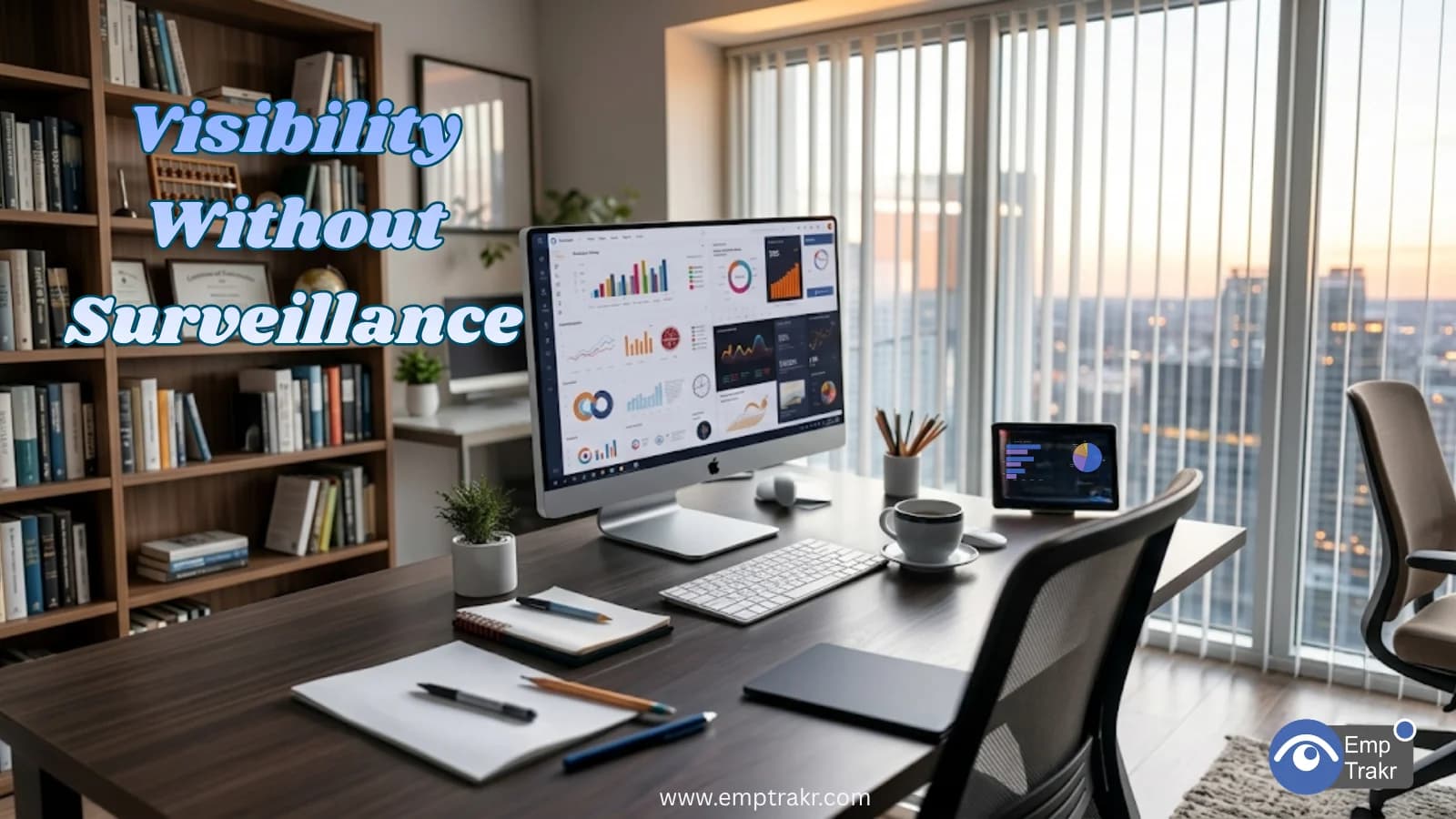
Visibility Without Surveillance Remote Team Strategies
Many companies mistakenly believe visibility requires constant monitoring.
In reality, effective Visibility without surveillance remote team Management focuses on performance indicators rather than personal activity.
Best Practices
Measure Results
Track completed work and project progress.
Use Productivity Dashboards
Review trends rather than individual moments.
Automate Reporting
Reduce manual oversight.
Encourage Self-Management
Allow employees to own their responsibilities.
Communicate Expectations Clearly
Employees should understand performance standards.
These approaches provide Visibility without surveillance remote team Environments that support both productivity and trust.
Remote Work Management Best Practices 2026
As remote work continues evolving, leading organizations are adopting modern Remote work management best practices 2026.
Focus on Outcomes
Evaluate results rather than online presence.
Establish Clear KPIs
Employees should know how success is measured.
Use Data-Driven Insights
Leverage workforce analytics to identify trends.
Maintain Regular Communication
Strong communication improves collaboration.
Automate Reporting
Reduce administrative work and improve accuracy.
Support Employee Well-Being
Productive teams require healthy work environments.
These Remote work management best practices 2026 Help businesses build sustainable remote work cultures.
Common Remote Management Mistakes
Measuring Activity Instead of Productivity
Being online all day doesn't guarantee meaningful work.
Lack of Clear Expectations
Employees perform better when goals are defined.
Overmonitoring
Excessive tracking damages trust.
Ignoring Workforce Data
Analytics only create value when used effectively.
Poor Communication
Remote teams need structured communication channels.
Avoiding these mistakes helps organizations manage distributed teams more effectively.
How EmpTrakr Supports Remote Team Productivity
EmpTrakr Helps organizations manage remote teams through workforce visibility and productivity analytics.
Key Features
-
Productivity tracking
-
Attendance monitoring
-
Workforce dashboards
-
Team performance insights
-
Automated reporting
-
Activity analytics
-
Application usage reports
-
Workforce trend analysis
These tools help managers understand productivity while maintaining employee autonomy.
Monitoring vs Micromanagement
There's an important difference between monitoring and micromanagement.
| Monitoring | Micromanagement |
|---|---|
| Focuses on outcomes | Focuses on activities |
| Uses productivity trends | Watches every action |
| Builds accountability | Creates pressure |
| Supports autonomy | Reduces independence |
| Encourages trust | Damages trust |
The goal of Run productive remote team monitoring Is to improve visibility—not control employees.
Building a Sustainable Remote Work Culture
Long-term remote work success depends on culture.
Organizations should:
-
Prioritize trust
-
Measure meaningful performance metrics
-
Communicate openly
-
Use workforce data responsibly
-
Focus on employee development
When employees feel trusted and supported, productivity naturally improves.
Final Thoughts
Learning how to Run productive remote team monitoring Programs successfully requires balancing visibility, accountability, and trust.
The most effective organizations use technology to gain workforce insights while empowering employees to work independently.
By adopting the right Remote team management productivity tools, maintaining a healthy Trust and monitoring remote work balance, creating Visibility without surveillance remote team Environments, and following proven Remote work management best practices 2026, businesses can build high-performing remote teams that remain productive for years to come.
For organizations looking to improve remote workforce visibility, EmpTrakr provides the productivity analytics, reporting, and workforce monitoring tools needed to support modern remote teams.
Frequently Asked Questions
What does run productive remote team monitoring mean?
It refers to using productivity tracking and workforce visibility tools to manage remote employees while maintaining trust and accountability.
Which remote team management productivity tools are most useful?
Tools that provide productivity tracking, attendance monitoring, workforce analytics, and automated reporting are typically the most effective.
How can businesses maintain trust and monitoring remote work balance?
By focusing on outcomes, being transparent about monitoring practices, and avoiding excessive employee surveillance.
What is visibility without surveillance remote team management?
It is an approach that uses productivity insights and performance metrics instead of monitoring every employee action.
What are the most important remote work management best practices 2026?
Clear goals, outcome-based performance measurement, workforce analytics, transparent communication, and employee trust are among the most important practices.
Related EmpTrakr resources
Continue with product pages that match this topic — and explore more guides on the blog.
Supercharge your workforce today.
Join leading companies using EmpTrakr to boost productivity, streamline tracking, and optimize remote teams.