Free Remote Work Monitoring Tools: 8 Ways to Track Distributed Teams in 2026| EmpTrakr
Need a work from home tracker free of privacy risks? Find out how to monitor remote employee productivity free with top non-invasive remote monitoring tools.
Introduction
Remote work arrangements have become a standard operational model for organizations worldwide, prompting C-level executives to seek reliable methods for assessing team output. The demand for solutions centered on monitor remote employee productivity free has grown as leaders balance performance expectations with legal and cultural considerations around privacy. Effective oversight requires approaches that avoid unnecessary surveillance while delivering actionable insights into workflow efficiency.
Organizations that adopt ethical employee monitoring software report higher retention rates and sustained productivity levels compared to those relying on intrusive tactics. This shift reflects broader market trends where executives prioritize tools that support transparency without eroding employee trust. Non-invasive remote monitoring practices allow companies to maintain competitive performance metrics while respecting individual boundaries.
This discussion examines practical frameworks for implementing remote work monitoring tool free options, highlights proven techniques for work from home tracker free solutions, and outlines steps for integrating these methods into existing corporate structures. Executives will gain clarity on selecting approaches that align with both business objectives and regulatory standards. The content focuses on direct applications suitable for high-level decision making.
The Importance of Ethical Monitoring in Remote Work Environments
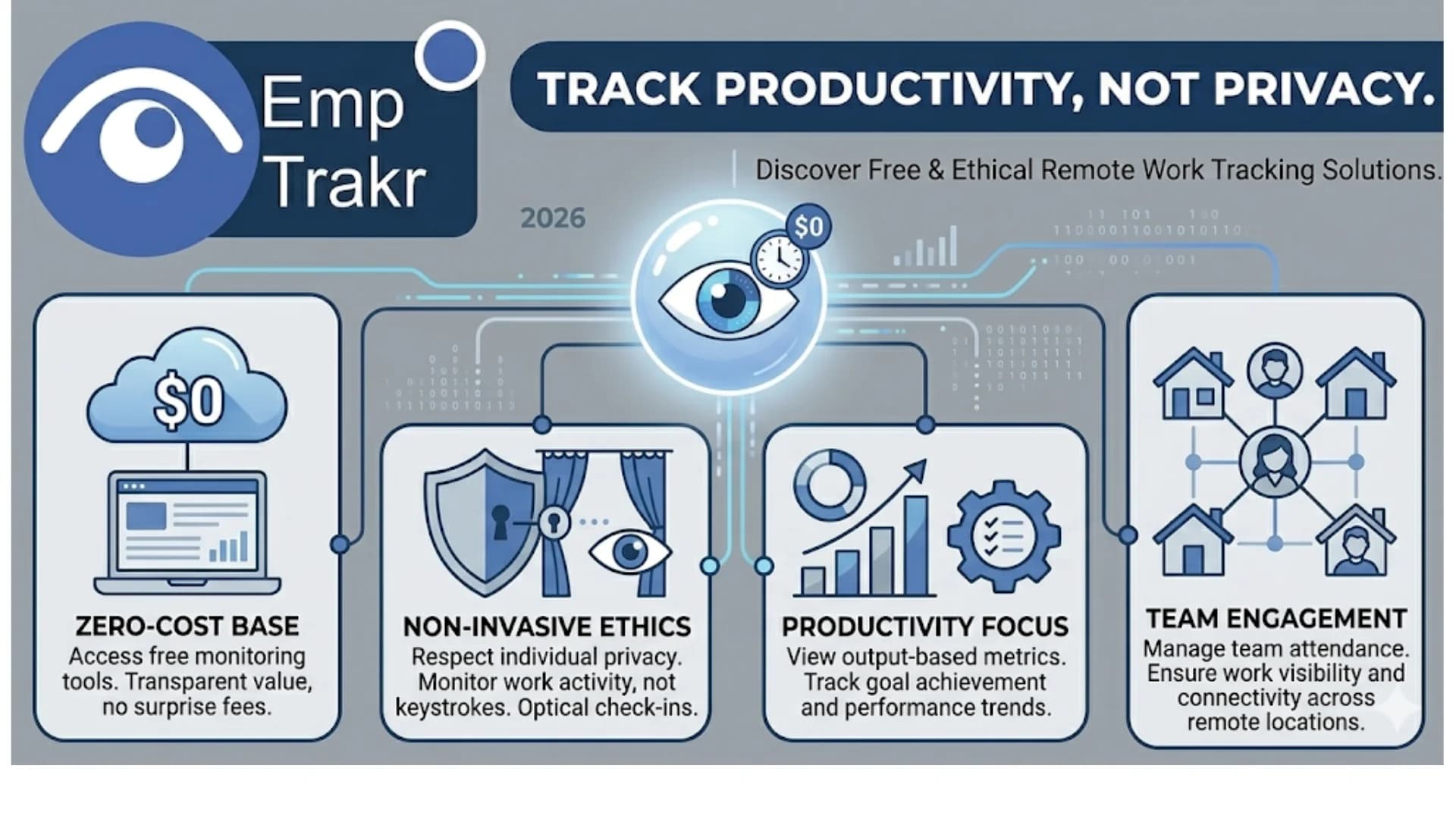
Executives recognize that remote teams require structured visibility into daily activities to ensure alignment with strategic goals. Ethical employee monitoring software provides this visibility through aggregated data rather than individual tracking, which reduces risks associated with data privacy regulations. Companies that implement such systems often experience improved collaboration and reduced instances of disengagement among distributed staff.
Without proper frameworks, leaders may default to overly broad monitoring practices that lead to compliance issues or diminished morale. Non-invasive remote monitoring addresses these concerns by focusing on output metrics such as project completion rates and response times instead of continuous screen captures. This method supports accountability while preserving the autonomy valued in remote settings.
Industry analyses indicate that organizations using work from home tracker free applications achieve measurable gains in efficiency within the first quarter of deployment. These tools enable executives to identify bottlenecks early and allocate resources accordingly. The emphasis remains on data that informs operational improvements rather than punitive measures.
Clear policies must accompany any monitoring initiative to define acceptable data collection boundaries. Training sessions for managers further reinforce consistent application across departments. Such preparation helps maintain organizational culture during transitions to hybrid or fully remote models.
Utilizing Free Tools for Effective Productivity Tracking
Multiple platforms offer remote work monitoring tool free capabilities that integrate with common business applications without additional licensing costs. These solutions typically track time allocation across tasks through voluntary check-ins or project management integrations. Executives can review summarized reports that highlight team trends and individual contributions over defined periods.
Implementation begins with selecting tools that require minimal setup and operate within existing cloud environments. For instance, open-source options allow customization to match specific workflow requirements while avoiding vendor lock-in. Regular audits of tool performance ensure continued relevance as team structures evolve.
Work from home tracker free systems often include features such as automated reporting and goal-setting modules that executives can configure centrally. This centralization supports consistent standards across global teams without requiring on-site oversight. Data from these tools feeds directly into performance reviews and resource planning discussions.
Executives should evaluate compatibility with current security protocols before full rollout. Pilot programs involving select departments provide real-world validation of tool effectiveness. Feedback loops from these pilots refine configurations and address any usability concerns prior to company-wide adoption.
Strategies for Non-Invasive Oversight and Employee Trust
Successful non-invasive remote monitoring relies on transparent communication of monitoring objectives from the outset. Leaders communicate that data collection serves performance support rather than surveillance, which fosters acceptance among team members. Documented guidelines detail exactly which metrics are captured and how they influence evaluations.
Regular feedback sessions allow employees to review their own aggregated data and suggest adjustments to tracking parameters. This collaborative element strengthens trust and reduces resistance to monitoring initiatives. Organizations that maintain open channels report higher participation rates in voluntary productivity programs.
Combining free tools with established performance management cycles ensures monitoring remains tied to business outcomes. Metrics such as milestone achievement and client satisfaction scores provide context beyond raw activity logs. Executives review these combined indicators during quarterly planning meetings to inform strategic adjustments.
Periodic policy reviews accommodate changes in remote work regulations or internal priorities. External benchmarks from similar organizations help validate chosen approaches and identify areas for refinement. This ongoing process supports sustainable oversight practices that scale with company growth.
Conclusion
Organizations achieve balanced oversight by prioritizing ethical employee monitoring software and non-invasive remote monitoring techniques that deliver results without compromising privacy. Key practices include selecting appropriate free tools, establishing transparent policies, and focusing on output-based metrics. Executives who apply these methods position their teams for sustained productivity gains. Consider evaluating current remote workflows against these outlined strategies to identify immediate improvement opportunities.
Related EmpTrakr resources
Continue with product pages that match this topic — and explore more guides on the blog.
Supercharge your workforce today.
Join leading companies using EmpTrakr to boost productivity, streamline tracking, and optimize remote teams.