Free Employee Productivity Dashboard: How to Build One Without Paying a Cent| EmpTrakr
Explore our free employee productivity dashboard to monitor team performance, track KPIs, and unlock workforce insights with professional analytics software.
Introduction
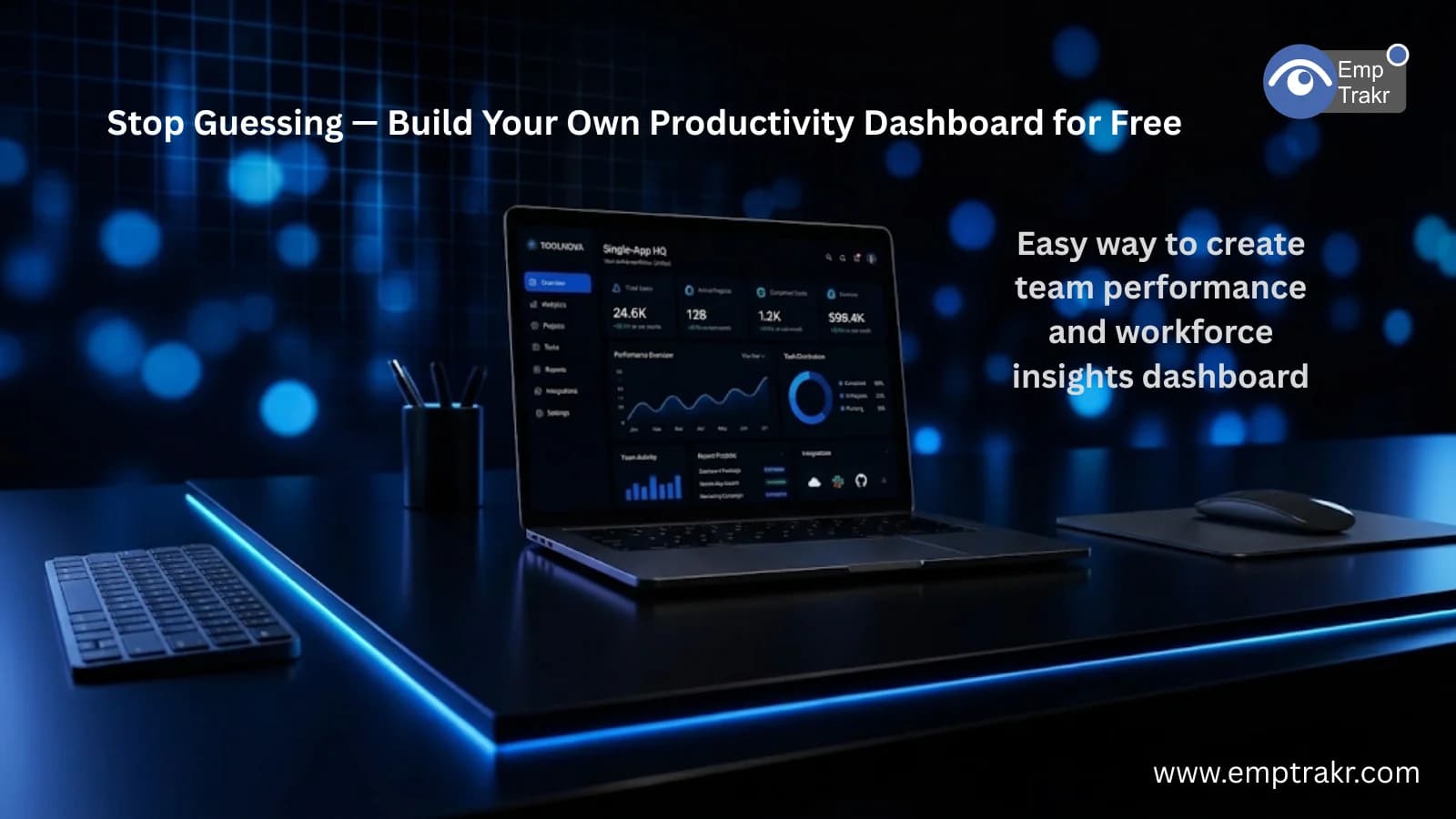
Executive leaders face constant pressure to optimize operations while controlling costs. A free employee productivity dashboard delivers real-time visibility into workforce performance without requiring budget allocation for premium platforms. Organizations that implement such solutions report improved decision-making and reduced overhead associated with manual reporting processes.
This topic holds particular relevance for C-level executives seeking data-driven insights into team output. Productivity metrics, when tracked consistently, enable proactive adjustments that support strategic goals. Companies adopting free dashboard solutions often achieve measurable gains in efficiency across departments.
The following sections outline a structured approach to building a free employee productivity dashboard. Readers will examine essential metrics, available tools, and implementation steps. Secondary considerations include integration with existing systems and long-term maintenance practices that sustain value over time.
Identifying Core Metrics for a Workforce Insights Dashboard
Effective dashboards begin with clearly defined performance indicators that align with organizational objectives. Key metrics such as task completion rates, average project duration, and attendance patterns provide foundational data for analysis. Executives benefit from focusing on these elements to gain an accurate view of operational health without added expense.
Additional indicators include output quality scores and collaboration frequency, which reveal deeper insights into team dynamics. When selected thoughtfully, these measurements support targeted interventions that improve overall results. Real-world applications demonstrate that dashboards limited to five to seven core metrics maintain clarity while delivering actionable intelligence.
Practical advice involves mapping each metric to specific business outcomes before configuration. For instance, linking employee KPI tracker free elements to revenue targets helps prioritize high-impact areas. This method ensures the dashboard remains relevant and avoids unnecessary complexity that could dilute executive focus.
Case examples from mid-sized enterprises show that consistent metric tracking leads to a 15 to 20 percent improvement in project delivery timelines. Leaders who review these indicators weekly can identify trends early and allocate resources efficiently. Such practices reinforce accountability across management levels while keeping costs at zero.
Leveraging Free Tools for Productivity Analytics Software Free
Multiple no-cost platforms enable the construction of robust analytics environments suitable for corporate use. Open-source options and widely available cloud services, such as Google Sheets combined with visualization add-ons, form the basis of many successful implementations. These resources allow seamless data aggregation from various sources without licensing fees.
Integration with time-tracking methods enhances accuracy. Detailed guidance on tracking employee work hours for free without spreadsheets appears in related resources at https://emptrakr.com/blog/how-to-track-employee-work-hours-for-free-without-spreadsheets. Executives can extend this foundation by incorporating automated data feeds that update dashboard views in real time.
Another consideration involves employee monitoring capabilities. Comprehensive evaluations of available solutions are outlined at https://emptrakr.com/blog/free-employee-monitoring-software-7-best-tools-that-actually-work-in-2026, which supports selection of compatible free tools. Combining these elements creates a unified system that captures both quantitative output and qualitative engagement data.
Implementation examples illustrate how organizations consolidate information from multiple departments into a single interface. Bullet-point lists of required fields, such as daily output logs and KPI thresholds, streamline setup. Numbered configuration steps, beginning with data import and ending with automated alerts, reduce setup time to under two hours for most teams.
Implementing a Team Performance Dashboard Free
Deployment requires a phased rollout that begins with pilot testing in one department before organization-wide adoption. Initial configuration focuses on importing historical data to establish baseline performance levels. This approach minimizes disruption while allowing refinement based on user feedback.
Customization options include conditional formatting to highlight underperformance and automated reporting schedules that deliver summaries directly to executive inboxes. Workforce insights dashboard elements, such as trend lines and comparative charts, further support strategic reviews during leadership meetings. Regular audits ensure data integrity and prevent accumulation of outdated entries.
Long-term success depends on training sessions that equip managers to interpret results accurately. Organizations that establish clear ownership for dashboard maintenance observe sustained usage rates above 85 percent. Adjustments based on evolving business priorities keep the system aligned with shifting objectives.
Practical applications extend to remote and hybrid environments where visibility into distributed teams proves essential. By maintaining a free employee productivity dashboard, executives sustain oversight without incurring recurring costs. This method supports scalable growth while preserving budget for core operational investments.
Conclusion
A free Employee productivity dashboard Equips C-level leaders with essential visibility into team output, KPI tracking, and operational trends at no cost. Key takeaways include selecting aligned metrics, utilizing accessible tools, and following structured implementation to achieve reliable results. Executives ready to enhance workforce oversight should begin by auditing current data sources and selecting an initial set of performance indicators.
Related EmpTrakr resources
Continue with product pages that match this topic — and explore more guides on the blog.
Supercharge your workforce today.
Join leading companies using EmpTrakr to boost productivity, streamline tracking, and optimize remote teams.